Vizhinjam’s growth as an international seaport requires more than the ability to accommodate large ships. Cargo also needs adequate space for storage, inspection, customs clearance and distribution. To address this requirement, the Kerala government has identified approximately 930 acres for logistics infrastructure, with acquisition proceedings under way for 230 acres. The proposed expansion aims to strengthen the port’s export import operations, address warehouse shortages and create new opportunities for businesses across the state.
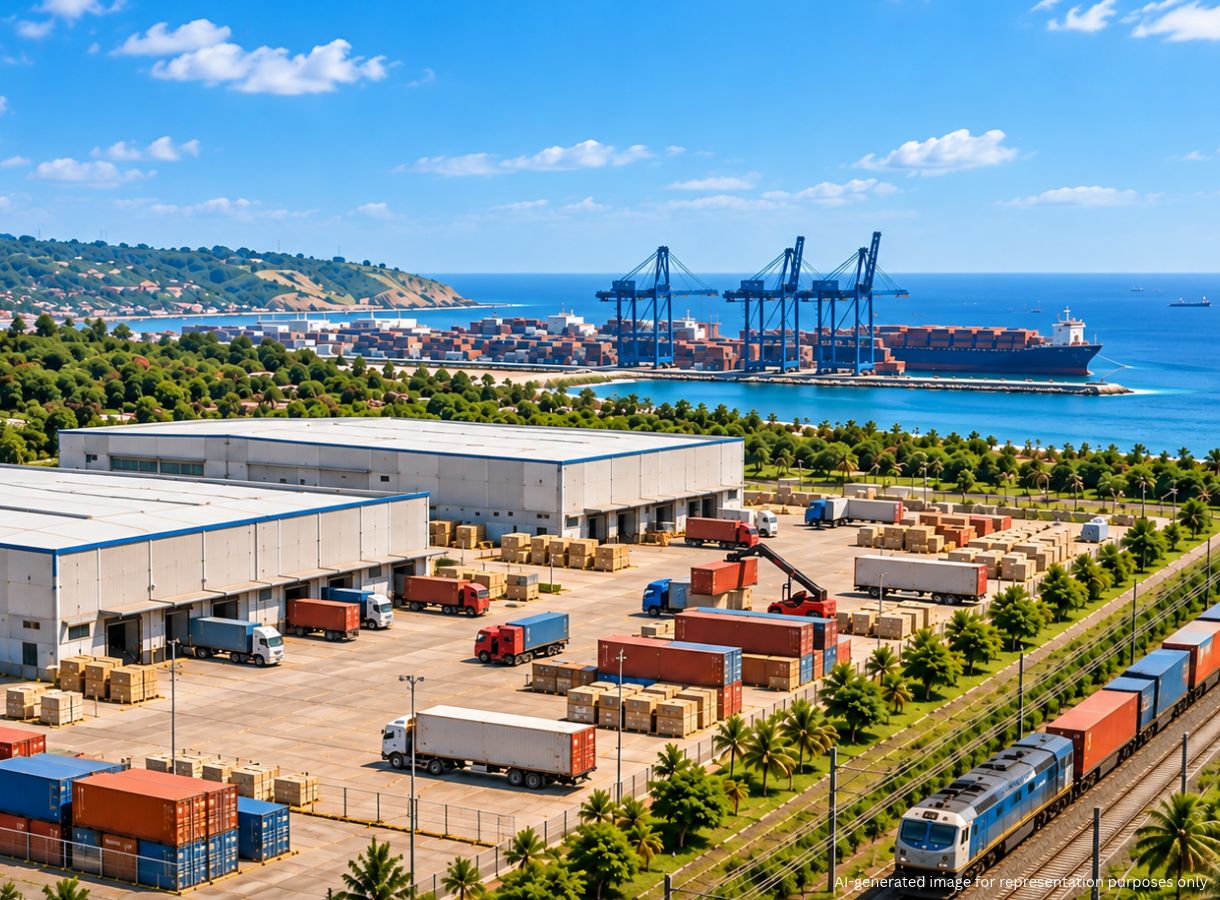
As Vizhinjam expands beyond ship-to-ship transshipment towards direct export import (EXIM) operations, supporting facilities on land have become increasingly important. The port needs a wider network of warehouses, container freight stations (CFSs), empty container yards and free trade warehousing zones to handle cargo beyond the terminal.
Currently, limited storage capacity and high land prices are contributing to expensive warehouse rentals in Thiruvananthapuram. These constraints affect businesses looking to establish storage and cargo handling facilities near the port.
The major challenges include:
The logistics hub is intended to address these gaps and support the port's expanding trade activities.
Vizhinjam International Seaport Ltd has identified approximately 930 acres for logistics requirements, with acquisition proceedings for 230 acres progressing. Discussions are also taking place with logistics operators, CFS operators, warehouse investors and shipping lines.
The development includes several initiatives:
The government has clarified that it will not introduce uniform rental rates for private warehouses. Charges will continue to depend on agreements between owners and users under prevailing market conditions.
Once the supporting infrastructure becomes operational, several groups could benefit:
Vizhinjam's development began with fishing harbour plans in the 1960s, followed by commercial port proposals during the 1980s and 1990s. A public private partnership was established in 2015, construction began that December, and commercial trials started in late 2024 before the port's official dedication in May 2025.
The proposed logistics hub represents the next stage of this development, connecting maritime operations with storage, cargo processing and distribution. Its wider economic impact will depend on land acquisition, private investment and the timely development of supporting facilities.
1. What is the Vizhinjam Logistics Hub project?
The Vizhinjam Logistics Hub is a proposed logistics infrastructure development in Thiruvananthapuram, Kerala. Approximately 930 acres have been identified for warehouses, container freight stations, empty container yards and other logistics facilities.
2. Why is the Vizhinjam Logistics Hub being developed?
The Vizhinjam Logistics Hub is being planned to address the shortage of warehouses and cargo handling facilities around Vizhinjam International Seaport. Limited storage capacity and high land prices have contributed to expensive warehouse rentals in Thiruvananthapuram.
3. How much land has been identified for the Vizhinjam Logistics Hub?
Vizhinjam International Seaport Ltd has identified approximately 930 acres for logistics infrastructure. Acquisition proceedings are progressing for 230 acres to support the development of warehouses and other logistics facilities.
4. What facilities will the Vizhinjam Logistics Hub include?
The Vizhinjam Logistics Hub is planned to accommodate warehouses, container freight stations (CFSs), empty container yards and free trade warehousing zones. A CFS has already been started by Kerala State Industrial Enterprises, alongside a larger warehousing and logistics park initiative.
5. Who will benefit from the Vizhinjam Logistics Hub?
The Vizhinjam Logistics Hub is expected to benefit exporters, importers, shipping lines, logistics operators, warehouse developers and local job seekers. It could create employment in warehousing, trucking, packaging, customs clearing and supply chain management while attracting further investment to Kerala.
6. What is Mission Samudra's role in the Vizhinjam Logistics Hub development?
Mission Samudra is a Kerala government initiative aimed at addressing shortages of warehouses, container freight stations and empty container yards through private sector participation. It is intended to strengthen logistics infrastructure and support economic development along the Vizhinjam-Kazhakootam corridor.