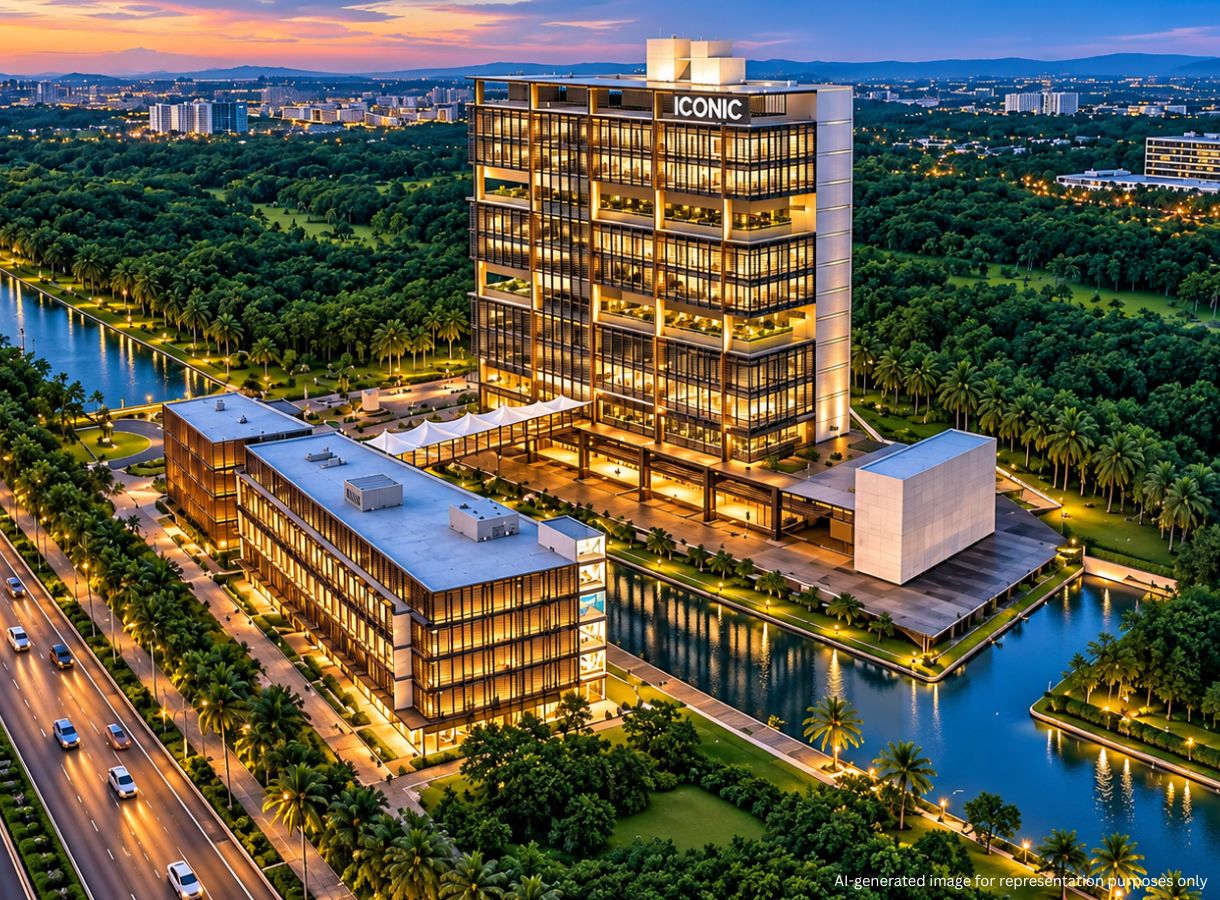
As Thiruvananthapuram continues to expand, easing congestion and improving connectivity between different transport networks have become important priorities. The Thiruvananthapuram Corporation is planning a ₹1,000-crore multi-modal mobility hub at Akkulam, spread across approximately 104 acres. The proposed Transit-Oriented Development (TOD) project aims to bring road, rail and water transport together while creating a commercial destination. If implemented as planned, it could ease pressure on the city centre and improve passenger movement across the capital.
Why Is the Akkulam Mobility Hub Being Planned?
Thampanoor currently handles a substantial share of the city's inter-city and long-distance bus operations. This contributes to traffic congestion in the central areas, affecting daily commuters, office-goers and local businesses.
Transport connections are also spread across different locations, making transfers between buses, trains and flights less convenient. Existing terminals face parking and passenger facility constraints.
The proposed hub aims to address these challenges by relocating a significant portion of long-distance bus operations towards the NH 66 bypass. It is also intended to provide a common interchange for different transport modes.
Transport Integration and Proposed Facilities
Akkulam has several connectivity advantages, with NH 66, Thiruvananthapuram North railway station at Kochuveli and the Parvathy Puthanar canal located nearby. The international airport is approximately 5 km away.
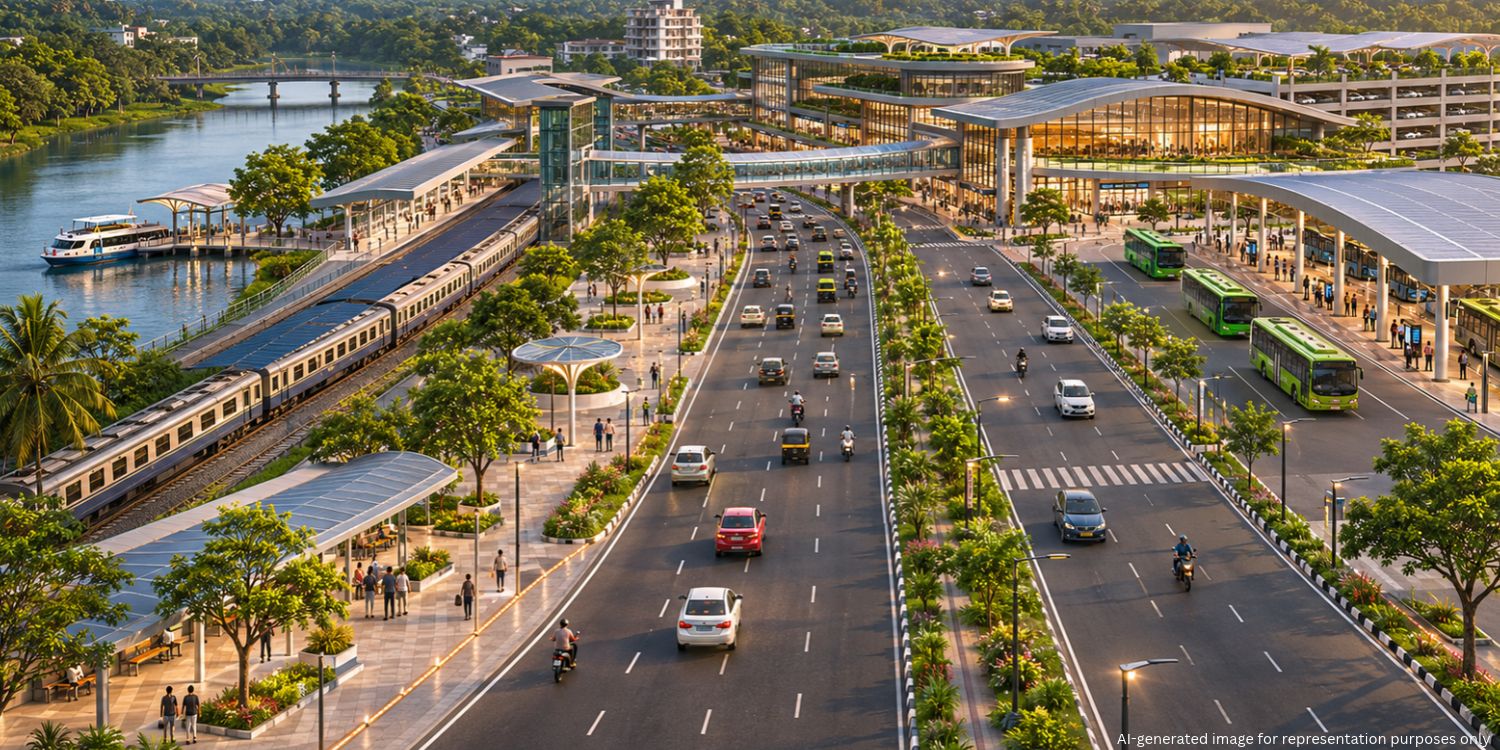
The project proposes to connect these networks through:
- Dedicated terminals for inter-city and regional buses.
- Passenger concourses and elevated walkways linking the bus terminal with Kochuveli railway station.
- A water transport jetty along Parvathy Puthanar.
- Airport feeder services and provision for future Metro connectivity.
- Multi-level parking accommodating more than 2,000 vehicles.
- Electric vehicle charging stations, smart ticketing and digital passenger information systems.
These facilities are intended to make transfers between transport services more convenient while reducing dependence on private vehicles.
Commercial Development and Economic Benefits
Beyond transportation, the project is planned as a commercial and hospitality destination. Its proposed facilities include shopping complexes, retail outlets, office spaces, business suites, transit hotels, restaurants, food courts and recreational areas.
This development could create employment opportunities and provide additional commercial space in Akkulam. Retail businesses, hospitality operators and service providers around Akkulam and Veli could benefit from increased commercial activity.
Daily commuters and long-distance passengers could gain access to improved waiting facilities and better-connected transport services. Central city residents and businesses, particularly around Thampanoor and East Fort, could benefit from reduced bus traffic.
Air passengers and employees travelling between the airport and the Technopark and Kazhakkoottam areas are also among the intended beneficiaries of the proposed feeder connections.
Project Cost and Funding Structure
The estimated project cost is approximately ₹1,000 crore. The Corporation is seeking a central government grant of around ₹250 crore through the Urban Challenge Fund, accounting for approximately 25% of the proposed expenditure.
The remaining funding is expected to come from private investment through a Public-Private Partnership (PPP), institutional loans, municipal bonds and other financing arrangements.
Under the proposed PPP structure, the selected private developer would undertake construction and long-term operation and maintenance. The land and associated development are expected to be provided through a 30-year lease. Revenue from commercial rentals, hospitality facilities, parking charges and other services is expected to support the project's financial sustainability.
Current Status and Expected Timeline
As of November 2026, the project remains in its planning and Detailed Project Report (DPR) preparation stage. The Local Self-Government Department has approached the Corporation regarding financial assistance under the Urban Challenge Fund, and an initial presentation covering the infrastructure and funding proposals has been completed.
The Corporation is preparing the DPR to finalise the project components, financial requirements and PPP arrangements. A separate DPR is also being prepared for the rejuvenation of Akkulam Lake, covering waterfront development and ecological restoration, with funding also being sought under the Urban Challenge Fund.
The key expected milestones are:
- By February 2027: Completion of the DPRs for the mobility hub and Akkulam Lake rejuvenation.
- Early 2027: Submission of the proposals to the state and central governments for approval and the proposed ₹250-crore grant.
- After approval: Tendering and selection of a private developer to undertake construction, operation and maintenance.
What the Akkulam Mobility Hub Could Mean for Thiruvananthapuram
The proposed Akkulam mobility hub brings transport integration and commercial development into a single large-scale plan. By shifting long-distance bus operations away from Thampanoor and connecting road, rail and water transport, it could change how passengers access different parts of the city.
However, the project must progress through DPR finalisation, funding approvals and private partner selection before construction can move forward. Its eventual impact will depend on how these stages are executed.
FAQs
1. What is the Akkulam Multi-Modal Mobility Hub project in Thiruvananthapuram?
The Akkulam Multi-Modal Mobility Hub is a proposed ₹1,000-crore Transit-Oriented Development (TOD) project spread across approximately 104 acres. Planned by the Thiruvananthapuram Corporation, it will integrate road, rail and water transport with commercial and hospitality facilities.
2. Why is the Akkulam Mobility Hub being developed?
The Akkulam Mobility Hub project aims to reduce traffic congestion at Thampanoor by shifting a substantial share of long-distance and inter-city bus operations towards the NH 66 bypass. It will also bring different transport networks together, making passenger transfers more convenient.
3. What transport facilities will the Akkulam Mobility Hub provide?
The proposed hub will include dedicated bus terminals, passenger concourses, elevated walkways connecting Kochuveli railway station and the bus terminal, and a water transport jetty along Parvathy Puthanar. It will also provide airport feeder services, future Metro connectivity and parking for over 2,000 vehicles.
4. How much will the Akkulam Mobility Hub cost, and how will it be funded?
The project is estimated to cost approximately ₹1,000 crore. Around ₹250 crore, representing 25% of the total, is expected through a central government grant under the Urban Challenge Fund. The remaining amount is planned through private investment, institutional loans, municipal bonds and other financing mechanisms.
5. Who will benefit from the Akkulam Multi-Modal Mobility Hub?
Daily commuters, long-distance bus passengers, railway travellers and air passengers are among the primary beneficiaries. Residents and businesses around Thampanoor and East Fort could benefit from reduced traffic congestion, while retailers, hospitality operators and service providers around Akkulam and Veli could gain from commercial development.
6. What is the current status and expected completion timeline of the Akkulam Mobility Hub?
As of November 2026, the project is in the DPR preparation stage. The Corporation expects to complete the Detailed Project Report by February 2027 and submit it to the state and central governments in early 2027 for approval and funding. Construction dates have not been announced.